
ACL Injury Management: Surgery, Rehabilitation, or Letting It Heal?
Updated: 6 days ago
If you’ve torn your ACL, one of the first questions you may have is: Do I need surgery?
For years, ACL tears were commonly associated with ACL reconstruction, particularly for athletes who wanted to return to sport. But our understanding of ACL injuries has changed.
Research now suggests that some people can recover successfully with rehabilitation alone, while others may benefit from surgery after a period of physiotherapy. There is also growing evidence that some torn ACLs may show signs of healing.
The best treatment isn’t necessarily the same for everyone.
Your symptoms, knee stability, activity level, other injuries, and goals all play a role in deciding what comes next.
TL;DR
An ACL tear does not automatically mean you need surgery.
Some ACL injuries may show signs of healing with rehabilitation alone.
Physiotherapy is an important part of recovery whether or not you have surgery.
A rehabilitation-first approach can give you time to see how your knee responds before deciding on surgery.
Surgery may still be appropriate for people with ongoing instability, certain associated knee injuries, or specific sporting demands.
Returning to sport should be based on strength, function, movement, and readiness, not simply the number of months since your injury.

What Is an ACL Injury?
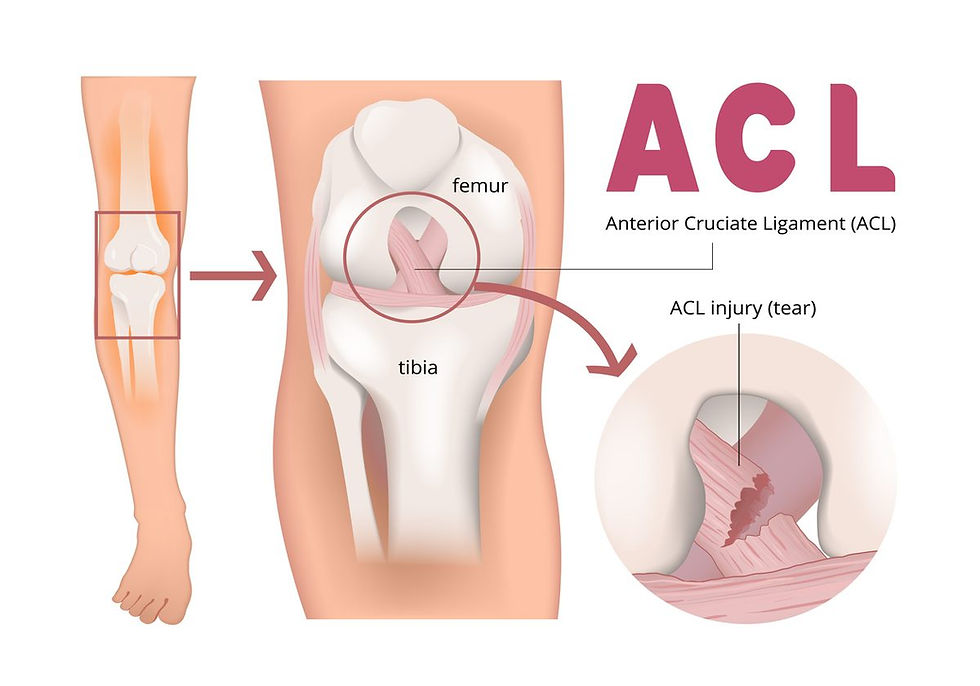
The anterior cruciate ligament, or ACL, is one of the major ligaments that helps stabilize your knee. One of its main jobs is preventing anterior translation of the tibia, meaning it keeps your shin bone from sliding too far forward relative to your thigh bone.
ACL injuries commonly happen during sports that involve sudden stops, changes of direction, jumping, or pivoting. Skiing, soccer, basketball, football, and similar activities are common examples.
Some people hear or feel a "pop" when the injury happens, followed by swelling, pain, and difficulty putting weight through the leg.
Once an ACL tear is diagnosed, the next question is usually how to treat it.
And that's where things have become more interesting.
Can a Torn ACL Heal Without Surgery?
Traditionally, the ACL was thought to have very little ability to heal after a complete rupture.
More recent research has challenged that assumption.
The KANON trial looked at people with ACL ruptures who initially received rehabilitation rather than immediate surgery. Researchers found evidence of ACL healing on MRI in some participants.
Approximately 30% of participants assigned to rehabilitation first showed evidence of ACL healing on MRI at two years. Among participants who did not eventually undergo surgery, approximately half showed evidence of healing.
Signs of healing were also observed much earlier in some participants.
Even more interestingly, participants whose ACLs showed evidence of healing reported favourable outcomes related to sport and recreation, quality of life, and knee symptoms.
What Does This Mean for Someone With an ACL Tear?
It doesn't mean that every torn ACL will heal.
It also doesn't mean that surgery is unnecessary.
What it does tell us is that ACL injuries may have more than one successful treatment pathway.
Some people may regain excellent knee function through rehabilitation without reconstruction. Some may show signs of ligament healing. Others may continue experiencing instability and ultimately decide that surgery is the better option.
That's why an individualized approach is so important.
What Are the Treatment Options to Manage an ACL Injury?
There are generally three pathways that may be considered following an ACL injury.
1. ACL Reconstruction Surgery
ACL reconstruction replaces the injured ligament with a graft.
Surgery may be considered for people who have ongoing knee instability, want to return to certain high-demand pivoting sports, or have additional knee injuries that influence treatment decisions.
But surgery isn't a shortcut around rehabilitation.
Recovery following ACL reconstruction commonly takes many months, and returning to sport requires extensive strengthening and progressive rehabilitation.
Surgery also doesn't guarantee that your knee will feel exactly as it did before the injury.
2. Rehabilitation First, With Surgery if Needed
Another option is to begin with structured physiotherapy and delay the decision about surgery.
Rather than deciding immediately after the injury, you spend time rebuilding:
Knee mobility
Quadriceps and hamstring strength
Balance and coordination
Confidence in the knee
Ability to perform progressively more demanding activities
Your progress can then help guide the decision.
If your knee becomes strong, functional, and stable enough for your goals, surgery may not be necessary.
If you continue experiencing instability or can't return to the activities that matter to you, ACL reconstruction remains an option.
For many people, rehabilitation provides valuable information about what their knee can actually do.
3. Non-Surgical ACL Rehabilitation
Some people choose to manage an ACL injury without reconstruction.
This doesn't mean simply waiting for the knee to get better.
Non-surgical ACL management typically involves a structured rehabilitation program designed to restore strength, movement, stability, and confidence.
It may be an appropriate option for some recreational athletes and people whose knees remain stable during their desired activities.
Your physiotherapist can help determine how your knee responds to increasingly challenging movements and whether non-surgical management aligns with your goals.
Physiotherapy Is Important Whether You Have Surgery or Not
One thing remains consistent across ACL treatment pathways: rehabilitation matters.
Whether you're preparing for surgery, recovering from ACL reconstruction, or trying to manage your injury without surgery, physiotherapy plays an important role.
Early ACL Rehabilitation
During the early stages, physiotherapy may focus on:
Managing swelling
Restoring knee range of motion
Improving your ability to straighten the knee
Re-establishing quadriceps activation
Gradually restoring normal walking
The goal is to get the knee moving and functioning comfortably again.
Building Strength
As symptoms settle, rehabilitation becomes progressively more challenging.
Exercises may focus on strengthening the:
Quadriceps
Hamstrings
Glutes
Calves
Muscles surrounding the hip and knee
Strength is particularly important for helping the knee tolerate the demands of everyday activity and sport.
Returning to Running and Sport
Later stages of ACL rehabilitation may include:
Running
Jumping and landing
Balance exercises
Change-of-direction drills
Agility exercises
Sport-specific movements
These activities are gradually introduced based on how your knee responds.
Why You May Not Need to Decide on Surgery Immediately
The period immediately after an ACL injury isn't always the best time to judge what your knee will ultimately be capable of.
The knee may be swollen, painful, stiff, and difficult to control.
Physiotherapy can give the knee time to settle while restoring movement and strength.
Clinicians sometimes describe the goal as achieving a "quiet knee," meaning swelling has decreased, movement has improved, and the muscles surrounding the knee are functioning more normally.
At that point, you and your healthcare team may have a much clearer picture of whether surgery is appropriate.
Who May Benefit From ACL Surgery?
There isn't a simple checklist that determines who should or shouldn't have ACL reconstruction.
Surgery may be considered when someone:
Continues experiencing episodes of the knee giving way
Wants to return to high-demand pivoting or cutting sports
Has additional knee injuries that affect treatment decisions
Cannot achieve the stability or function required for their activities through rehabilitation
Your age, sport, occupation, lifestyle, symptoms, and personal goals should all be considered.
What Are "Copers" and "Non-Copers"?
You may come across the terms coper and non-coper when researching ACL injuries.
A "coper" generally refers to someone who can function well despite having an ACL-deficient knee.
A "non-coper" experiences ongoing instability or difficulty performing desired activities without an intact ACL.
But this isn't always obvious immediately after an injury.
A period of rehabilitation can help determine how well your knee adapts and functions before making longer-term treatment decisions.

Return to Sport Isn't Just About Time
One of the biggest changes in ACL rehabilitation is moving away from treating recovery as a simple countdown.
Returning to sport isn't just about reaching six, nine, or twelve months after your injury or surgery.
Your physiotherapist may assess factors such as:
Quadriceps and hamstring strength
Single-leg control
Hop testing
Balance
Movement quality
Ability to run, jump, land, and change direction
Psychological readiness and confidence
Someone can reach a certain number of months after injury and still not be ready for sport.
The goal is to make sure your knee is prepared for the demands you're asking it to handle.
What About the Long-Term Health of Your Knee?
An ACL injury can increase the risk of developing osteoarthritis later in life.
Importantly, ACL reconstruction doesn't completely eliminate this risk.
That's another reason long-term rehabilitation matters.
Maintaining strength, staying active, managing your workload, and continuing to look after your knee remain important regardless of whether you choose surgical or non-surgical treatment.
When Should You See a Physiotherapist After an ACL Injury?
Consider seeing a physiotherapist if:
You've recently injured or torn your ACL
Your knee feels unstable or gives way
You're unsure whether you need surgery
You're preparing for ACL reconstruction
You're recovering after surgery
You want to return to running or sport
You're struggling to regain strength or confidence in your knee
A physiotherapist can assess your current function and help you understand what the next stage of recovery should look like.
ACL Treatment Is No Longer Automatically Surgery First
Our understanding of ACL injuries continues to evolve.
For some people, ACL reconstruction will be an important part of getting back to the activities they love.
For others, rehabilitation may provide enough stability and function that surgery isn't necessary. Emerging research also suggests that some ACLs may demonstrate healing following rehabilitation.
The important thing is that you don't necessarily have to make the decision immediately.
At Shift Physiotherapy & Wellness in Edmonton, physiotherapy can help you rebuild knee strength, restore movement, assess stability, and make informed decisions about your recovery based on your individual goals.
Whether your path involves surgery or rehabilitation alone, the goal is the same: helping you build a strong, confident knee that can handle the activities that matter to you.
FAQ
Can a torn ACL heal without surgery?
Research suggests that some ACL ruptures can show evidence of healing on MRI following rehabilitation without immediate surgery. However, not every ACL will heal, and MRI appearance is only one part of determining how well the knee functions.
Do all ACL tears require surgery?
No. Some people can regain good knee stability and function through rehabilitation without ACL reconstruction. Whether surgery is appropriate depends on factors such as instability, additional knee injuries, sporting demands, and personal goals.
Should I try physiotherapy before ACL surgery?
A rehabilitation-first approach may be appropriate for some ACL injuries. Physiotherapy can restore movement and strength while providing valuable information about how stable and functional your knee is. Your physiotherapist, physician, and surgeon can help determine the best approach for your specific injury.
How long does ACL rehabilitation take?
ACL recovery varies significantly between individuals. Rehabilitation usually progresses through several stages, from managing swelling and restoring movement to strength training, running, jumping, and sport-specific activities. Return to sport should be based on your functional readiness rather than time alone.
Can I return to sports without ACL surgery?
Some people can return to recreational and sporting activities without ACL reconstruction. The answer depends on the stability of your knee, the demands of your sport, your strength and movement control, and how your knee responds to rehabilitation.
What happens if my knee keeps giving way?
Repeated episodes of instability are important to discuss with your physiotherapist and medical team. If your knee continues to give way despite appropriate rehabilitation, your treatment plan may need to be reassessed and surgery may be considered.
Is physiotherapy necessary after ACL surgery?
Yes. ACL reconstruction is only one part of recovery. Physiotherapy is essential for restoring range of motion, rebuilding strength, improving movement control, and gradually preparing the knee for everyday activities and sport.
